Do you struggle with your results in search engine rankings despite great quality content? You might be lacking one essential ingredient: technical SEO. While backlinks and content get the majority of attention but technical SEO assures that your site will be accessible to crawlers, indexable as well as user-friendly–the basis of all highly-ranked websites.
In this full technical SEO checklist We’ll walk you through each aspect of optimizing your website to meet Google’s current algorithm requirements, from core web vitals and AI readiness as well as crawl budget optimization as well as mobile-first indexing.
No matter if you’re a founder of a new startup or an SEO specialist or a developer who wants to boost the performance of your site This guide is designed to techno-savvy entrepreneurs who need tangible results, not flimsy.
What is Technical SEO?
Technical SEO is the process of enhancing your site’s infrastructure so that search engines index and crawl your website’s content effectively. Contrary to the on-page SEO (content) or off-page SEO (backlinks) technical SEO is focused specifically on the backend mechanisms of your website.
The main goals are:
- Improve the speed of your website
- Improve indexability and crawlability
- Improve the user experience (UX)
- In line to Google’s Core Web Vitals
- Avoid SEO roadblocks such as duplicative content, broken links or duplicate pages.
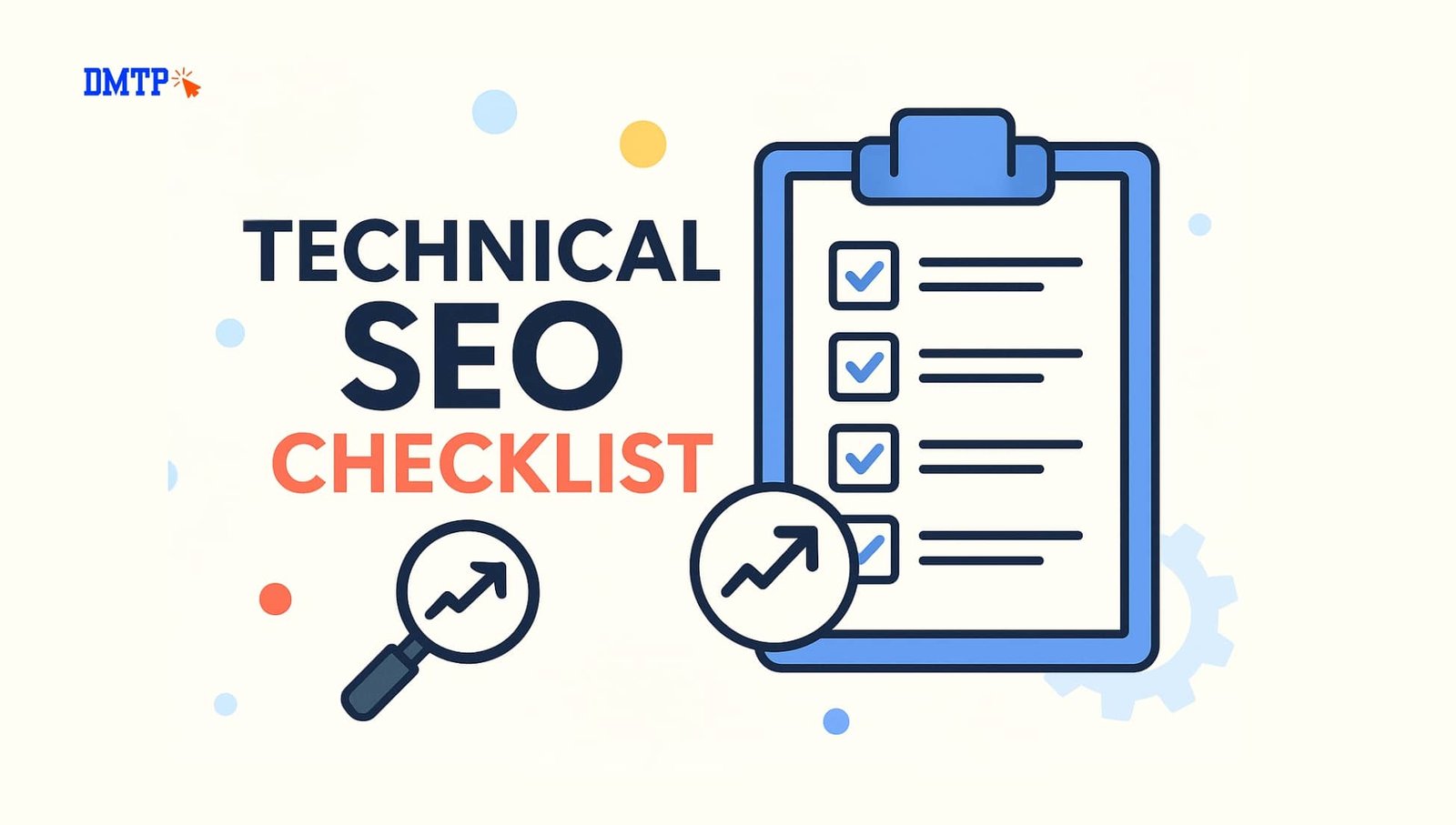
Complete Technical SEO Checklist (2025 Edition)
Let’s reduce it into actionable tasks.
1. Crawlability & Indexability
Create and upload XML sitemap
- Utilize tools such as Yoast, Rank Math, or Screaming Frog
- Submit it in Google Search Console (GSC)
Improve Robots.txt file
- Make sure that important pages are crawlable
- Block thin or duplicate content (e.g. or /wp_admin(e.g., /wp-admin)
Verify crawl mistakes in GSC
- Repair 404s, server errors and redirect chains
Use canonical tags that are appropriate
- Beware of duplicate content issues that can arise with different variations
Beware of pages that are not orphaned.
- Every page must be connected to the internal web
2. Mobile-First Optimization
Responsive design across devices
- Utilize a fluid grid, and CSS media queries
Non-intrusive Interstitials (pop-ups)
- Beware of penalties due to poor user experience on your mobile device.
Make use of mobile-friendly testing tools
- Google Mobile-Friendly Test
Clickable elements that are spaced properly
- Stop “Tap target too small” error in GSC
3. Core Web Vitals (UX Performance Metrics)
Improve Largest Contentful Paint (LCP)
- Goal <2.5s load time
- Make use of Image compression (WebP) and lazy loading and CDN
Fix First Input Delay (FID)
- Minimize JavaScript execution
- Optimize scripts from third parties
Enhance Cumulative Layout Shift (CLS)
- Use media with fixed dimensions.
- Beware of content that is dynamically injected
Make use of tools like PageSpeed Insights and Lighthouse to determine the efficiency.
4. HTTPS & Site Security
Migrate to HTTPS
- Important for trust and rankings
- Make sure you have an SSL certificate that is valid. SSL certificate
Header encryption
- Use security headers like
Content-Security-PolicyandX-Content-Type-Options
Fix issues with mixed content
- Upgrade HTTP assets into HTTPS
5. URL Structure & Site Architecture
Use clean, descriptive URLs
- Example:
/technical-seo-checklistnot/page?id=43
Flat site architecture
- Make sure important pages are at least 2 clicks away from the homepage
Breadcrumb navigation
- Users and Google learn about the hierarchy of websites.
6. Site Speed Optimization
Make compression available (Gzip/Brotli)
Minify HTML, CSS, and JS
Utilize caching (browser and server-side)
Defer non-critical JavaScript
Then load the content above-the-fold first.
Think about the use of Cloudflare, NitroPack Consider using Cloudflare, NitroPack, or WP Rocket to speed up your website.
7. Technical SEO Audit Tools (Recommended)
| Tool | Best For |
|---|---|
| Screaming Frog | Site audits, broken links |
| Ahrefs Site Audit | Internal linking issues, crawler issues |
| Google Search Console | Indexation, coverage errors |
| PageSpeed Insights | Core Web Vitals |
| GTmetrix | Speed and breakdown of waterfalls |
8. Structured Data & Schema Markup
Add schema.org markup for:
- Articles
- Products
- FAQs
- Reviews
- Breadcrumbs
Validate using Rich Results Test
Make use of JSON-LD formats.
- Recommended by Google
9. Internal Linking & Site Health
Internal links with strategic importance
- Enhance crawl flow and user experience
- Use descriptive anchor texts
Fix broken links regularly
- Tools: Broken Link Checker, Ahrefs, Screaming Frog
Create pillar + cluster content structure
- Helps SEO and users comprehend the topical authority
AI Overview: How AI is Transforming Technical SEO
The year 2025 is when AI will play a central role in the way we review and optimize the technical aspects of websites:
- Artificial Intelligence-powered SEO software such as Surfer SEO, Jasper, and Frase find technical weaknesses and recommend improvements in real-time.
- The machine-learning models used by Google’s Search algorithms now assess UX signals more effectively specifically within Core Web Vitals.
- Crawlers powered by AI mimic real-world user behaviour to evaluate the quality of a website more precisely.
- Tools such as ChatGPT Gemini Tools like Gemini, ChatGPT as well as Claude are becoming increasingly utilized to automate audits of technical quality as well as generate meta data and create schema codes dynamically.
FAQ: Technical SEO Questions (Optimized for Voice Search)
1. What is an audit of technical SEO?
An audit of your technical SEO is a method of evaluating your site’s technical configuration to ensure that it is crawled and index your site, and index it efficiently.
2. When should I conduct an audit on technical SEO?
At minimum once a quarter, or following any major updates to the site or changes.
3. What can I do to correct crawl issues within Google Search Console?
Utilize the GSC’s “Pages” report to identify problems, then fix broken links, modify redirects, and submit sitemaps.
4. What is the difference between technical SEO from SEO on-page?
Yes. Technical SEO is focused on your website’s infrastructure (like mobile-friendliness, speed, and crawlability) and on-page SEO concentrates on the content and optimization of keywords.
5. Does technical SEO help rankings on its own?
Not only that but it’s crucial. Without a well-constructed website even the most compelling content might not rank.